

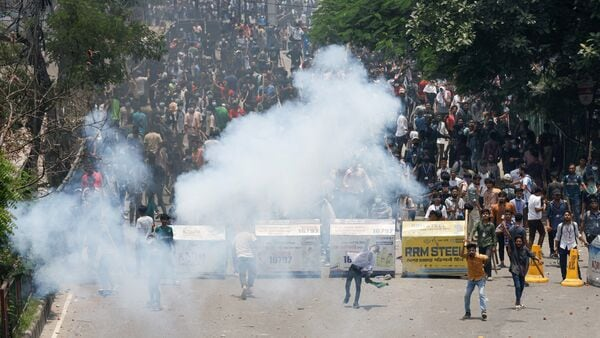

DHAKA: The Student Against Discrimination group, which has been leading protests in Bangladesh, announced a 48-hour suspension of their demonstrations on Monday. This decision comes in the wake of violent clashes that have claimed at least 163 lives, including several police officers.
Nahid Islam, the group’s leader, issued the statement from his hospital bed, where he was being treated for injuries inflicted by individuals he claims were undercover police. Islam urged the government to lift the curfew, restore internet access, and cease targeting student protesters during this period. The protests initially aimed to address grievances related to politicized admission quotas for government jobs but have escalated into some of the worst unrest under Prime Minister Sheikh Hasina’s administration.
On Sunday, the Supreme Court reduced the quota for reserved jobs, primarily for descendants of “freedom fighters” from the 1971 liberation war, from 56% to 7%. While this decision addressed some demands, it did not completely eliminate the quota, which critics argue is used to favor loyalists to Hasina’s ruling Awami League.
The violence has drawn severe criticism from both local and international observers. Ali Riaz, a professor of politics at Illinois State University, labeled the recent violence as “the worst massacre by any regime since independence,” accusing the government of relying on brute force with scant regard for civilian lives. The situation has prompted calls for international intervention from Bangladeshi Nobel Peace Prize laureate Muhammad Yunus, who urged world leaders and the UN to investigate the violence.
In diplomatic circles, there has been frustration over Bangladesh’s handling of the situation. Foreign Minister Hasan Mahmud was criticized for presenting a one-sided view of the unrest to ambassadors, and questions were raised about the use of UN-marked equipment in suppressing the protests.
Meanwhile, in the UAE, 57 Bangladeshi expatriates have been sentenced to prison for protesting against their government while abroad. The sentences range from life imprisonment for three individuals to 10 years for 53 others, highlighting the severe repercussions for such actions in countries with strict anti-protest laws.
As Bangladesh grapples with this crisis, the suspension of protests and the international response underscore the complexity and severity of the situation unfolding in the South Asian nation.
