


ISLAMABAD: Pakistani authorities have decided to implement a new procedure for the arrival and departure of Afghan citizens to enhance monitoring.
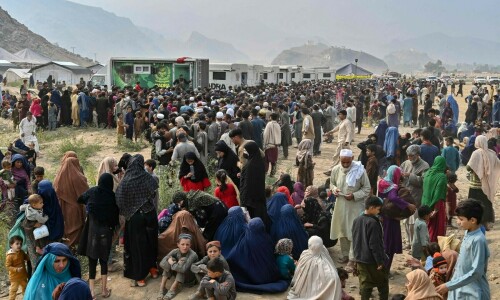
According to the sources, the Federal Investigation Agency (FIA) will take custody of Afghan refugees’ Proof of Registration (PoR) cards—a critical identity document held by over 1.3 million refugees—and Afghan Citizen Cards (ACC) at the Torkham border.
Those who return to Afghanistan voluntarily will be given a voluntary return form, which they can use to receive a grant in Afghanistan, the sources added.
The FIA will also punch and permanently block the cards of those returning to Afghanistan without the United Nations High Commissioner for Refugees (UNHCR). Once the card has been punched or taken into custody, it will not be returned. The aim of this new procedure is to improve the monitoring of Afghan citizens.
PM Seeks UNHCR Help to Address Refugees’ Issue
Meanwhile, Prime Minister Shehbaz Sharif has sought support from UN High Commissioner for Refugees Filippo Grandi in mobilizing adequate resources to supplement Pakistan’s efforts.
Grandi, on a three-day official visit to the country, called on PM Shehbaz on the last leg of his visit. The premier urged the UN body to promote durable solutions for Afghan refugees, including safe and dignified return and reintegration into their homeland, as well as third-country relocation.
During his visit, Grandi met with Afghan refugees in urban settings in Peshawar and Haripur and in a refugee village. “People he met shared a message of anxiety regarding their situation, but also their desire to contribute to their communities in Pakistan, as well as eventually in Afghanistan,” according to a UNHCR statement.
Grandi called for the timely extension of the PoR cards and appreciated that the “Illegal Foreigners Repatriation Plan” had been suspended, seeking assurances that it would remain on hold. He emphasized Pakistan’s tradition of hospitality towards Afghans with international protection needs.
Acknowledging the challenges facing Pakistan and its generosity in hosting Afghan refugees for 45 years, Grandi called for an urgent reset of the aid model towards solutions and responsibility sharing. This includes fostering new partnerships and developing innovative approaches to address the protracted displacement situation.
Grandi proposed a dialogue later this year, bringing together key stakeholders—government representatives, development actors, and the private sector—to develop a package of solutions benefiting both the Afghan population in Pakistan and the host country.
