

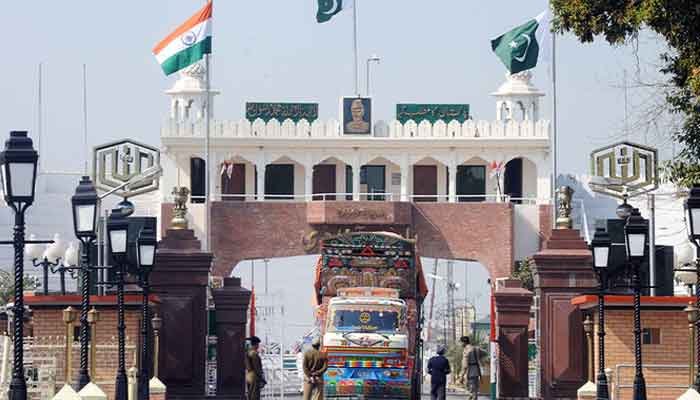

Political Strains
ISLAMABAD: A recent survey conducted by Gallup Pakistan has revealed that nearly half of Pakistanis are in favor of enhancing trade relations with India as a means to normalize bilateral ties following the ceasefire agreement between the two neighbors.
The survey sheds light on shifting public sentiments towards India, reflecting a growing interest in pursuing peace and economic cooperation.
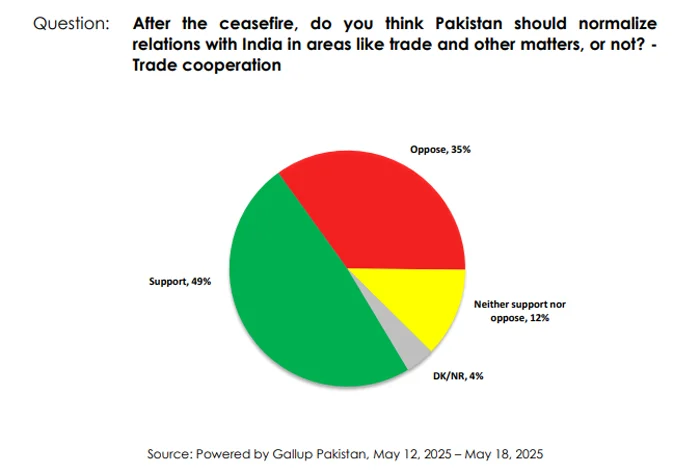
The nationwide survey, conducted between May 12 and 18, included responses from several hundred participants across various regions of Pakistan. When asked about the preferred steps for normalizing ties with India, 48% of respondents expressed support for boosting trade relations.
This signals a significant segment of the population advocating for a pragmatic approach to diplomacy, using economic engagement as a bridge for improved relations.
However, not all respondents were in agreement. About 35% of Pakistanis opposed the idea of resuming or enhancing trade ties with India, arguing that all longstanding and unresolved issues — particularly the Kashmir dispute — must be addressed before any form of normalization can take place.
Beyond trade, the survey also gauged opinions on other areas of cooperation. A notable 48% of respondents backed increased sports exchanges between the two countries, while 35% were against it.
Similarly, 44% supported educational collaboration, but 36% rejected the notion. In the cultural realm, 40% favored enhanced ties, though 35% continued to oppose such engagement.
The survey also posed a historical question regarding the partition of British India in 1947. When asked if they would have supported the separation from India had they been present at the time, a commanding 86% responded affirmatively.
Only 3% stated they would have opposed the division, while 7% said they could not decide, and 4% chose not to respond.
These findings offer an insightful glimpse into the evolving mindset of the Pakistani public, highlighting a cautious yet growing inclination toward peaceful coexistence and practical engagement with India, especially through trade and people-to-people contact.
