

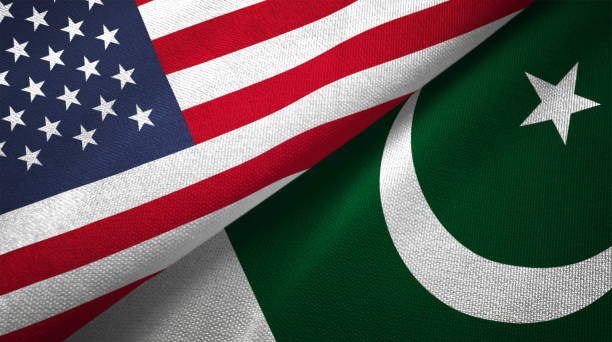

The year 2025 has emerged as a historic turning point in Pakistan–United States relations. According to US media, Washington has formally moved away from its long-standing “India First” policy. Pakistan is now being viewed as a central pillar of American strategy in South Asia.
A detailed report published by The Washington Times describes the shift as revolutionary. It states that Islamabad’s strategic relevance has grown rapidly. The change marks one of the most significant realignments in US foreign policy in recent years.
The newspaper attributes this transformation largely to developments following the brief but intense Pakistan–India conflict in May. That confrontation reshaped political and military perceptions in Washington.
May Conflict Triggers Strategic Reassessment
According to the report, the May conflict between Pakistan and India proved decisive. Pakistan’s military performance reportedly surprised President Donald Trump and senior US officials. The show of discipline and operational clarity altered long-held assumptions in Washington.
The conflict exposed weaknesses in India’s military posture. It also highlighted Islamabad’s readiness and strategic restraint. US policymakers reportedly reassessed regional dynamics soon after the clash.
The Washington Times noted that President Trump was particularly dissatisfied with India’s response to international ceasefire efforts. New Delhi’s rigid diplomatic stance raised concerns in Washington. In contrast, Pakistan’s openness to mediation enhanced its credibility.
In March, even before the conflict, Trump unexpectedly praised Pakistan during a public speech. Analysts described this as an early signal of policy change. Islamabad moved quickly to build diplomatic momentum. Limited cooperation soon evolved into growing political trust.
India’s Challenges and Pakistan’s Diplomatic Gains
The article explains that Washington had previously focused on elevating India through the Quad alliance. Pakistan was often sidelined in regional planning. However, doubts began to surface regarding India’s long-term role as a regional stabiliser.
India’s domestic political climate, restrictions on civil liberties, and inconsistent military outcomes drew criticism. Its inflexible foreign policy approach further complicated US expectations.
Meanwhile, Pakistan leveraged emerging opportunities. Diplomatic engagement intensified. Military-to-military contacts expanded. Islamabad positioned itself as a pragmatic and reliable partner.
The Washington Times highlighted unprecedented developments. These included a White House lunch hosted for Pakistan’s army chief. Field Marshal Syed Asim Munir also received a red-carpet welcome at US Central Command headquarters. High-level strategic meetings followed with senior American military leadership.
Asim Munir and Trump Shape New Regional Balance
The newspaper devoted significant attention to the relationship between Field Marshal Asim Munir and President Trump. US officials reportedly described the bond as unusually strong. Some even referred to it as a “bromance.”
Field Marshal Munir was portrayed as a “disciplined dark horse” and a “deliberate mystery.” His leadership style reportedly impressed Washington. Analysts believe this personal rapport played a key role in reshaping US policy.
Pakistan is now seen as a credible interlocutor on Iran-related issues. It is also viewed as a potentially constructive voice on matters linked to Gaza. These developments have elevated Islamabad’s regional standing.
The Washington Times concluded that Pakistan has become a cornerstone of Trump’s evolving South Asia policy. While the durability of this shift will depend on future conduct by both Islamabad and New Delhi, 2025 stands out as a year of rare transformation.
The rapid change in US perceptions—from viewing Pakistan as unfavoured to recognising it as a strategic partner—was described as exceptional in American foreign policy history.
