

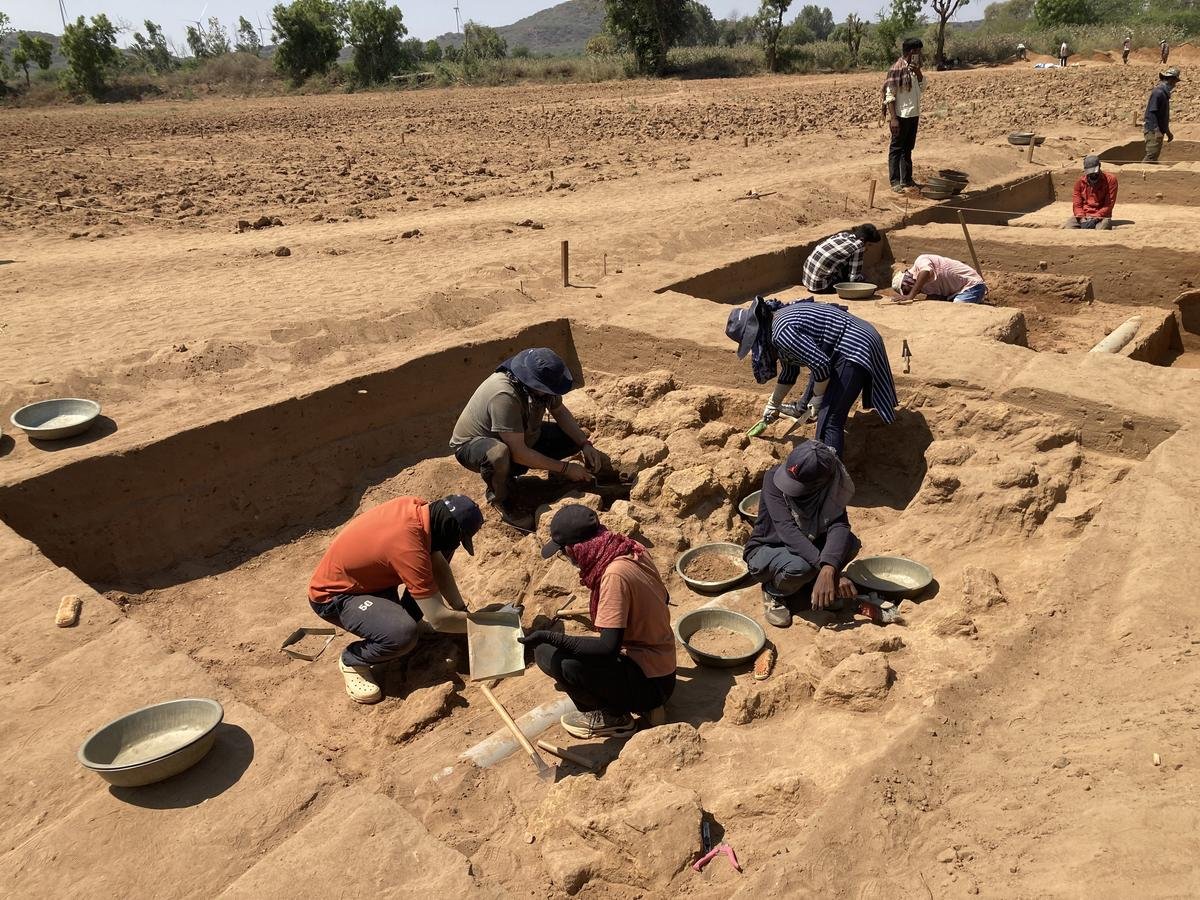

Archaeologists in Harappa have uncovered a 16th-century caravanserai, shedding new light on the subcontinent’s historic postal and travel systems, the Punjab Archaeology Department announced.
Discovery Sheds Light on Ancient Travel and Accommodation Practices
During a site briefing, Dr Ehsan Bhutta, Secretary of the Punjab Archaeology and Museums Department, said the discovery is “a crucial lead into the region’s early travel system and accommodation practices.” The caravanserai structure features designated resting areas for travellers and a water tank, reflecting an organized system of stopovers that supported long-distance movement.
In addition to the structure, archaeologists recovered several artefacts, including clay figurines, miniature toy carts, and fragments of bangles, offering a glimpse into the cultural and daily life of the era.
Dr Bhutta added that the Punjab government has allocated Rs800 million for excavations at four major historical sites in the province. He emphasized that the Harappa find will allow scholars to better interpret the travel and communication network established during Sher Shah Suri’s rule, enhancing understanding of the region’s historical continuity.
Connecting Past and Present: Harappa’s Legacy
Harappa, situated west of Sahiwal in Punjab, is one of the key Indus Valley Civilisation sites, dating back to around 6000 BC, and is recognized as the cradle of urban culture in South Asia. Along with Mohenjo Daro in Sindh, Harappa served as a major urban centre. Excavations in the 1920s led to both sites being designated UNESCO World Heritage Sites in 1980.
Dr Bhutta highlighted that this recent discovery will further underscore the region’s ancient civilisation and its continuity across centuries, bridging historical insights with modern archaeological research.
