

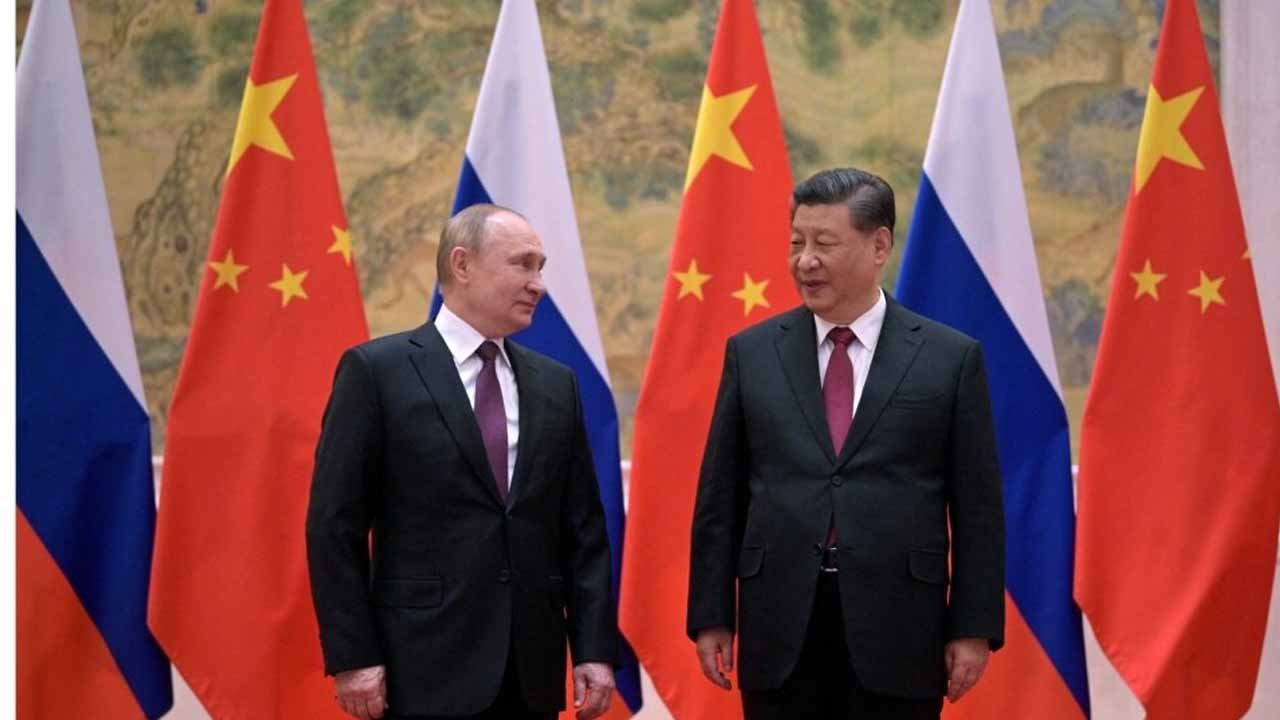

ISLAMABAD: On Wednesday, China declared its intention to host an event next week for foreign leaders to commemorate a decade of its Belt and Road Initiative project. Russian President Vladimir Putin is anticipated to participate in the event.
The Belt and Road Initiative represents a significant project in President Xi Jinping’s effort to expand China’s influence abroad. Beijing announced this week that it has signed contracts worth over two trillion dollars worldwide.
The event, scheduled for October 17 and 18, will see representation from over 130 countries, with Xi delivering an opening speech and hosting a welcoming banquet for foreign leaders. This marks the third forum of its kind since the launch of China’s extensive investment initiative, with previous events in 2017 and 2019.
Russian President Putin has confirmed his attendance at the event, marking his first visit to China since the Ukraine war began last year. Russia’s top diplomat, Sergei Lavrov, will also be present and will hold talks with his Chinese counterpart, Wang Yi. China and Russia often describe each other as strategic allies, emphasizing their comprehensive partnership encompassing economic and military cooperation.
China has refrained from condemning the war and has positioned itself as a neutral party, all while extending crucial diplomatic and financial support to Moscow.
Foreign Ministry spokesperson Mao Ning stated last month, “We invite countries and partners actively engaging in the Belt and Road Initiative (BRI) to come to Beijing to discuss cooperation plans and pursue mutual development.”
Significant debt distress
On Tuesday, Beijing celebrated the BRI, affirming that it has “delivered real gains to participating countries.” The Export-Import Bank of China (Eximbank), a crucial creditor for BRI projects, has amassed a total of 2.2 trillion yuan ($307.4 billion) in loans.
Eximbank has supported major transportation and energy initiatives throughout the BRI, engaging in foreign loan programs spanning from Africa to Central Asia. However, some of Beijing’s partners have grown increasingly concerned about the associated costs.
Italy, the sole among the group of leading developed democracies to join the investment scheme, recently stated that it was contemplating withdrawing from the agreement.
A report from experts at Boston University’s Global Development Policy highlighted the BRI’s role in providing “additional resources for the Global South” and promoting “significant economic growth.” Nevertheless, it also pointed out that “many recipients of Chinese finance are grappling with significant debt distress, with several countries owing China a significant portion of their external debt.”
