

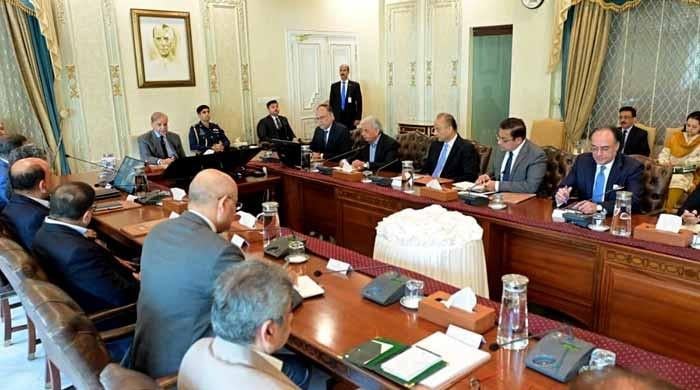

The maiden meeting of the 11th National Finance Commission (NFC) convened in Islamabad on Thursday, marking an important step toward reshaping Pakistan’s fiscal framework. Chaired by Finance Minister Muhammad Aurangzeb, the session concluded with a strategic decision to establish six to seven working groups that will examine key financial matters and guide the nationwide discourse on resource distribution.
The meeting brought together high-level provincial and federal representatives, including the chief ministers of Sindh and Khyber Pakhtunkhwa, both attending as provincial finance ministers. Punjab and Balochistan were represented through their respective finance ministers, while KP’s Adviser on Finance, Muzzammil Aslam, and FBR Chairman Rashid Langrial also participated. Private members from all provinces were in attendance, reflecting the inclusive nature of the consultation process.
Formation of Working Groups to Address Fiscal Challenges
According to sources, the next NFC session is likely to be held on January 8 or 15, continuing the dialogue initiated in Thursday’s meeting. The newly formed working groups will investigate a range of financial issues, including one dedicated specifically to the fiscal incorporation of the former FATA districts, focusing on their complete integration into the national financial structure.
Sindh Chief Minister Murad Ali Shah, speaking briefly to the media, confirmed that the working groups would push discussions forward. Similarly, Muzzammil Aslam described the meeting as “constructive” and noted that all views were heard without pressure. He emphasised that the groups would operate under an umbrella body and clarified that no proposal was discussed regarding reducing the provinces’ share of the NFC Award.
Aurangzeb Stresses Dialogue, Cooperation and Constitutional Responsibility
During the session, Finance Minister Muhammad Aurangzeb underscored the significance of the 11th NFC as a constitutional requirement under Article 150, noting that the 10th NFC Award ended in July 2025. He credited the prime minister for pushing to convene the meeting without delay, despite earlier disruptions caused by devastating floods across multiple provinces.
Aurangzeb highlighted the importance of transparent dialogue to resolve fiscal concerns, stating, “Our first priority is to listen to one another. The federal government is here to hear the provinces’ position.” He expressed hope that provinces would continue to demonstrate constructive cooperation, as shown earlier through their support for the National Fiscal Pact, IMF commitments, and maintaining fiscal surpluses.
He also referenced Pakistan’s recent national challenges—from severe floods to heightened threats from India—asserting that the federation remained united during these crises. “This is the spirit we wish to preserve throughout the process of the 11th NFC Award,” he remarked.
Revisiting the NFC Award: Proposed Changes to Resource Distribution
Meanwhile, a working paper titled “Revisiting the NFC Award”, prepared by the Ministry of Planning and shared with Prime Minister Shehbaz Sharif, has proposed notable reforms to the vertical and horizontal distribution of fiscal resources.
Vertical Distribution
Two scenarios have been presented:
-
Scenario 1 suggests upfront deductions for national priorities—such as water security, counterterrorism, Civil Armed Forces, and grants to AJK & GB—before the remaining pool is divided as usual (57.5% provinces, 42.5% federal).
-
Scenario 2 proposes deducting BISP and HEC expenditures upfront, increasing federal fiscal space by 11–12% by FY2030.
Horizontal Distribution
The report also suggests shifting away from the current population-heavy model (82% weight). Three alternative options redistribute weights across factors like revenue generation, forest cover, inverse fertility rate, and population density. Under all proposals, Punjab’s share declines, while KP, Balochistan, and ICT see varying degrees of increases.
The working paper warns that persistent federal deficits—ranging from 5% to 8.4% for over a decade—have created structural imbalances, escalating debt and limiting fiscal space for national priorities.
