

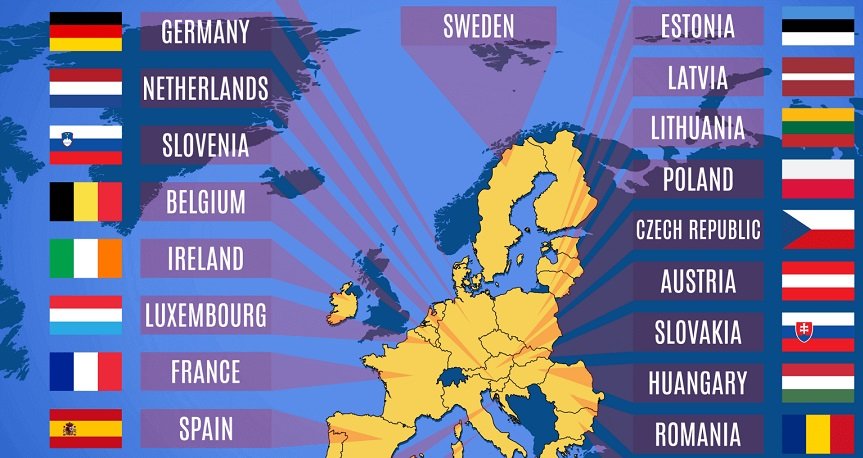

Schengen
The EU’s once-idyllic system of passport-free travel among its member states is undergoing significant changes due to perceived terrorist threats and concerns about unchecked immigration.
European governments are increasingly implementing border controls to reclaim sovereignty and bolster national security.
Eleven Schengen countries, including France, Slovakia, Sweden, and Germany, have reintroduced various border controls such as identity checks, passport checks, police interviews, static checkpoints, and vehicle inspections.
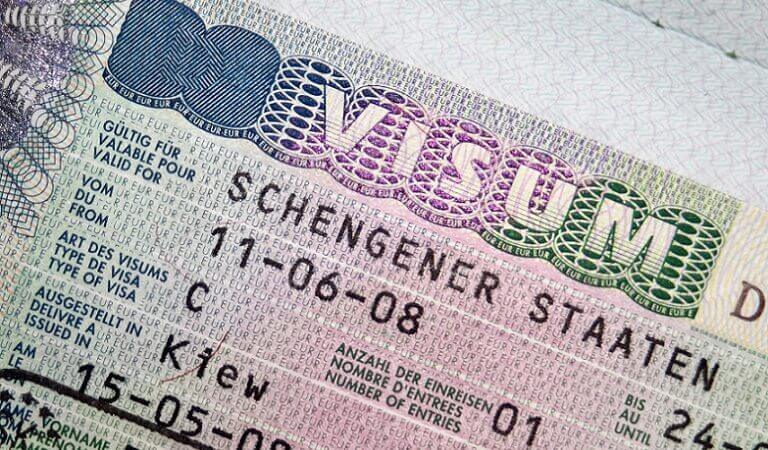
This move reflects the belief among many nations that such measures are necessary to prevent the “infiltration” of terrorists posing as migrants and to alleviate pressure on overloaded asylum reception centers.
Italy, for example, heightened border checks with Slovenia, attributing the increased threat to the Israel-Hamas conflict and the constant migratory pressure from land and sea. In response, Slovenia initiated border checks with Croatia and Hungary, citing threats to public order and internal security similar to those faced by Italy.
The Schengen treaty, signed nearly 40 years ago, allows unrestricted travel between certain EU countries. However, the recent border restrictions directly contradict the spirit of Schengen rules, which permit entry to the EU without passport checks until departure.
Critics argue that Schengen, once hailed as the “crown jewel of European integration,” has become a magnet for both terrorists and migrants. Last year, a third of a million illegal immigrants, refugees, and asylum seekers entered the EU legally through external borders and freely moved within the EU under Schengen regulations.
Migration expert Alberto-Horst Neidhardt warned that tightening borders highlights the fragility of the Schengen zone. The pro-immigration Greens in Germany expressed concern over police data indicating a significant influx of illegal immigrants.
France reinstated checks at all its internal EU borders, emphasizing the need to discuss immigration in the context of sovereignty. Denmark, monitoring Germany’s borders, cited terrorism, organized crime, and illegal immigration as significant threats to internal security. Sweden, citing the grave threat of Islamic terrorism, is monitoring all its EU borders.
Amidst these developments, Croatia’s Prime Minister Andrej Plenkovic acknowledged tighter borders across Europe, attributing them to the numerous crises engulfing the EU in the past 30 years.
